Bitcoin SEO Lab · informational
Bitcoin address explained: receive without revealing your keys
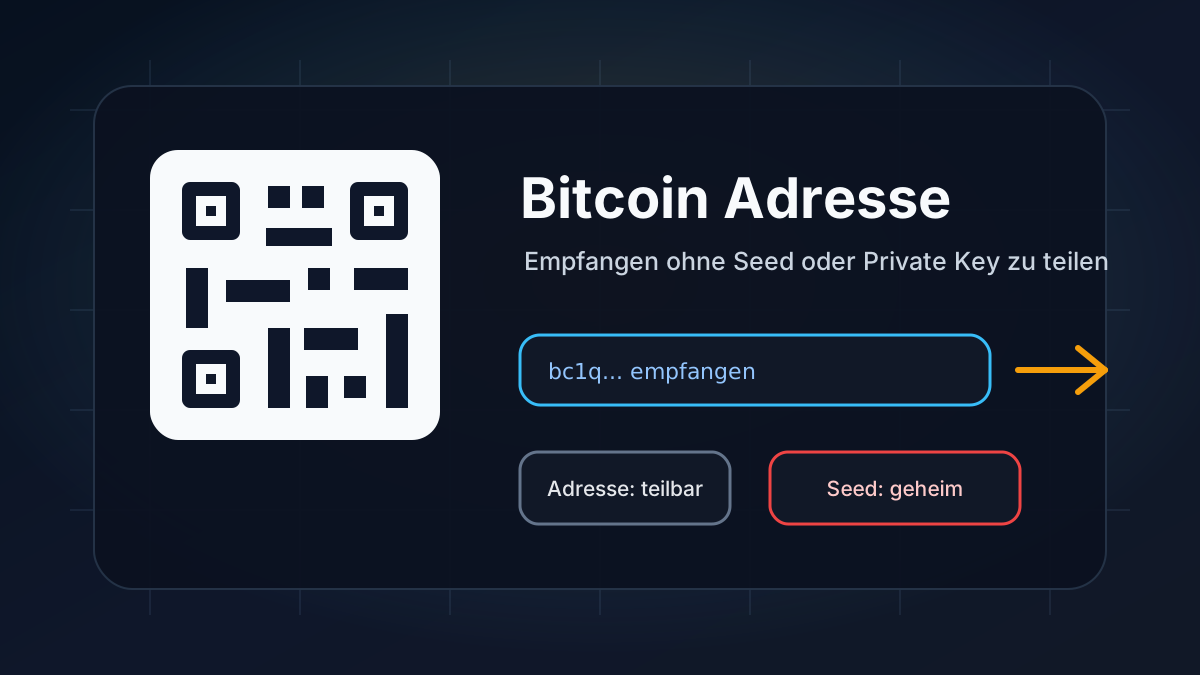
A Bitcoin address is a receiving address for payments on the Bitcoin network. You can give it to another person or service so they can send bitcoin to you. The important part: an address is not your private key and not your seed phrase. It is more like a public mailbox label, while the secret keys stay inside your wallet.
For beginners, this distinction matters because many security mistakes come from mixing these terms up. If you first want to understand what a wallet does, read What is a Bitcoin wallet?. The difference between a secret key and recovery words is covered in Private key vs seed phrase.
The short answer
A Bitcoin address:
- is generated by your wallet,
- is used to receive bitcoin,
- can normally be shared,
- is not the secret private key,
- should not be reused unnecessarily for privacy reasons,
- should be checked carefully before sending funds.
If someone knows your address, they can send bitcoin to it and, depending on blockchain data, may be able to analyze past or future activity connected to that address. But they cannot spend your bitcoin with the address alone.
What is a Bitcoin address used for?
When you want to receive bitcoin, your wallet shows a receiving address. You can copy it, display it as a QR code, or send it to the payer. The sender uses it as the destination in their transaction.
The actual control is not in the address itself. What matters is that your wallet manages the matching private keys, so it can later sign a spending transaction. That is why seed phrases and private keys should never be entered into chats, forms, or support requests. Sharing an address is normal; sharing a seed phrase is dangerous.
Address, public key and private key: what is the difference?
In simplified terms, these concepts are related, but they have different roles:
| Term | Role | Can it be shared? |
|---|---|---|
| Private key | Secret key used to sign transactions | no |
| Public key | Public key derived from the private key | technically public, but do not publish it unnecessarily |
| Bitcoin address | Receiving destination for payments | yes, for receiving |
| Seed phrase | Backup for many keys | never share it |
A wallet usually handles this derivation for you. You do not need to work manually with cryptographic keys. Still, the basic model is useful: address public, seed phrase and private keys secret.
Why do wallets generate new addresses?
Many modern wallets automatically show a fresh receiving address for new payments. This may look confusing at first, but it is normal. These addresses can still belong to the same wallet or seed phrase.
The main reason is privacy. If you always use the same address, other people can more easily connect payments to each other. New addresses do not make blockchain analysis impossible, but they reduce simple address reuse patterns.
That means an older receiving address is not automatically invalid. In many cases, it can still receive payments. For privacy, however, it is better to use the current receiving address shown by your wallet for each new payment.
Can you see the balance of an address?
The Bitcoin blockchain is public. For a single address, blockchain explorers can show transactions connected to that address. This can be useful for learning, but it is not a complete replacement for your own wallet or your own node.
Important: a wallet can manage many addresses. The balance of your wallet is not necessarily the balance of one address. Change addresses can also appear when you send bitcoin. For beginners, the practical rule is: use your wallet as the main overview and use explorers carefully without exposing unnecessary private data.
What is a change address?
Bitcoin does not work like a bank account with one running balance. When you send bitcoin, existing outputs are used as inputs. If an input is larger than the amount you want to send, the wallet usually sends the remainder back to a new address that also belongs to your wallet. This is called a change address.
That is normal and does not mean your money disappeared. It does explain why transactions can look unusual to beginners. Fees and inputs are closely related to this model; for an introduction, see Bitcoin transaction fees explained.
Common mistakes with Bitcoin addresses
Not checking the full address
Malware can manipulate the clipboard. Before sending, check at least the beginning and end of the address on a trusted device. For larger amounts, small test transactions can make sense.
Using the wrong network
A Bitcoin address is meant for Bitcoin. Do not confuse it with addresses for other networks or exchange-specific instructions. If a service offers several networks, check carefully that Bitcoin is really selected.
Sharing a seed phrase instead of an address
A seed phrase is never a receiving address. If a website, supposed support agent, or stranger asks for your 12 or 24 words, treat it as a major warning sign. Read more in How to store a seed phrase safely.
Posting one address permanently in public
A public donation address can be useful, but it reduces privacy. Anyone who publishes the same address permanently makes attribution easier. For projects, separate wallets, clear documentation, and conscious privacy decisions can be useful.
Mini-checklist: receiving bitcoin safely
Before you share an address or expect a payment:
- Open the real wallet app or the real hardware-wallet display.
- Generate or select a receiving address in the wallet.
- Copy the address or use the QR code directly from the wallet.
- For hardware wallets, verify the address on the device screen.
- For larger amounts, send a small test payment first.
- Wait for enough confirmations depending on the risk.
If a transaction is still unconfirmed, What is the mempool? explains Bitcoin's waiting area before the next block.
Frequently asked questions
Is a Bitcoin address secret?
No. An address is meant for receiving and can be shared. But it is not completely private because payments on the blockchain are visible. Share it deliberately and avoid unnecessary reuse.
Can someone steal my coins with my Bitcoin address?
No, not with the address alone. Spending requires valid signatures created from the private keys. The risk appears when a seed phrase, private key, or wallet device is compromised.
Why does my new address look different from the old one?
Bitcoin has several address formats, and wallets can derive new addresses from the same seed phrase. Different lengths or prefixes are therefore not automatically suspicious. What matters is that the address comes from your real wallet and belongs to the Bitcoin network.
Should I use each address only once?
For good privacy, it is sensible to use fresh receiving addresses for new payments. Your wallet usually does this automatically. For simple learning purposes, the most important rule is: use the address your wallet currently shows for receiving.
Next steps
If you want the broader context, continue with What is a Bitcoin wallet? and Private key vs seed phrase. Together, these articles explain why receiving addresses can be public while the secrets that control your bitcoin must stay private.